


Choosing how to care for your tattoo isn’t as simple as picking up something on the drugstore shelf. The difference between medical grade and drugstore aftercare may seem like a technicality, but at Mad Rabbit we think about it every day. Whether you’ve just taken the ink out of the needle or you’re a seasoned veteran with the ink up your sleeve, the products and techniques you choose for your healing can impact everything from comfort and infection risk to long-term vitality. Let’s take a deep, practical look together and decide once and for all whether choosing medical-grade tattoo aftercare really makes a difference.
What really matters after getting a tattoo?
Think of a new tattoo as a controlled trauma to your skin. The healing environment you create determines whether your body responds with brilliant, colorful art or fights off unnecessary irritation, inflammation, and even infection. The main priorities are:
Protect your fresh tattoo from germs and contaminants. Maintains optimal moisture without over-saturating or suffocating the area. Reduces inflammation, redness and itching, allowing skin to recover smoothly. Maintains ink fine detail and color saturation for a long time.
Medical-Grade Tattoo Aftercare: How and Why It Works
We consider medical-grade aftercare to be a tool designed to safely heal wounds, support rapid recovery, and prevent chronic inflammation. These typically include a sterile, germ-resistant dressing, known as a second skin dressing, or a targeted recovery gel designed for open skin. The highlights for us are:
Sterile, closed environment: Rooted in hospital wound care, the second skin bandage keeps germs out while you shower and go about your daily life. Moisture Management: These products capture enough natural healing fluids to promote tissue regeneration, which is essential to your tattoo, reducing scabbing and preventing discoloration. Purpose-Focused Formulas: Medical-grade soothing gels and recovery lotions eliminate cosmetic fragrances and irritating filler ingredients, focusing on substances with real clinical benefits.
Latest medical grade routine examples
First few days: Place a second skin bandage over the tattoo for 3 to 7 days (unless there is damage). For removal: Gently clean with a mild, specialized tattoo wash (like Mad Rabbit’s Vegan Foaming Tattoo Wash). Next few weeks: Apply a fragrance-free, non-petroleum-based soothing gel moisturizer to relieve itching, moisturize, and support recovery.
Drugstore aftercare: Why it’s so popular and where it falls short
Pharmacy shelves are stocked with petroleum-based ointments and generic unscented lotions. They’ve been popular in tattoo aftercare for decades, and sure enough, they’re easy and inexpensive to find. Its appeal is convenience and price. But there are pitfalls, as we see unfolding too often.
Petroleum-based ointments form a barrier, but they tend to trap bacteria and can be overly moisturizing, which can sometimes delay true healing or clog pores. Common lotions may contain alcohol, parabens, or fragrances that are not suitable for damaged or irritated skin. The focus here is on basic hydration and does little to actually repair the wound. There is little support for the independent science that says skin regenerates after getting a tattoo.
Drugstore vs. Medical Grade: Key Ingredient Differences
Type Main Role Common Ingredients Real World Pros Cons Medical grade second skin bandage Protects and retains healing fluids Medical grade polyurethane, medical adhesive Best protection. Reduced infections. Less likely to scab High cost, requires careful use Tattoo soothing gel Reduces itch and supports skin barrier Aloe Vera, Allantoin, Panthenol, Glycerin Clean, fast-acting, no irritants, vegan, unscented Primarily only in specialty stores or online Drugstore Petroleum ointment Retains moisture. Forms an occlusive layer Vaseline, lanolin, mineral oil Very affordable and widely available Can clog pores and trap bacteria and potential allergens Standard unscented lotion Moisture (mainly after scabbing) Water, glycerin, basic emulsifier Inexpensive, basic hydration May contain irritants and is not optimized for wounds
Healing outcomes: What is the evidence?
Does it really matter which camp you choose for your aftercare? According to our experience and solid evidence, the answer is yes.
With our medical-grade methods (combined with soothing gels professionally formulated for tattooed skin), you’ll see lower infection rates, less visible scabs, and faster completion of the healing phase. Clients often report that color and lines are retained at a higher level and their tattoos appear more vivid. Sensitive and allergy-prone skin types will experience less irritation if they don’t use bulking lotions or cheap ointments.
On the other hand, traditional drugstore ointment and lotion routines can be effective, but often result in several weeks of itching, excessive peeling and peeling, and even longer healing times, with an increased risk of poor color retention in the healed tattoo.
A practical comparison: Is medical-grade aftercare worth it?
We think about this as follows. A tattoo session is both an investment and a creative milestone. Why risk complications, revisions, and a higher chance of dulling your color to save a few bucks during the healing phase?
Medical grade second skin bandages typically cost between $10 and $20 for a standard size. The right tattoo aftercare gel will cost you $20 to $30 for the first few weeks, but it will give you peace of mind and better results. Not to mention the frustration of seeing your artwork fade so quickly, remedial work due to poor healing can cost you even more money.
Latest Mad Rabbit Tattoo Aftercare Routine
Immediately after tattooing: Apply a second skin bandage and leave it on for 3 to 7 days according to your artist’s instructions. First wash: Gently wash with new tattoo wash. This formula is vegan, unscented, and purpose-built to clean fragile, fresh tattoos without peeling or irritating them.
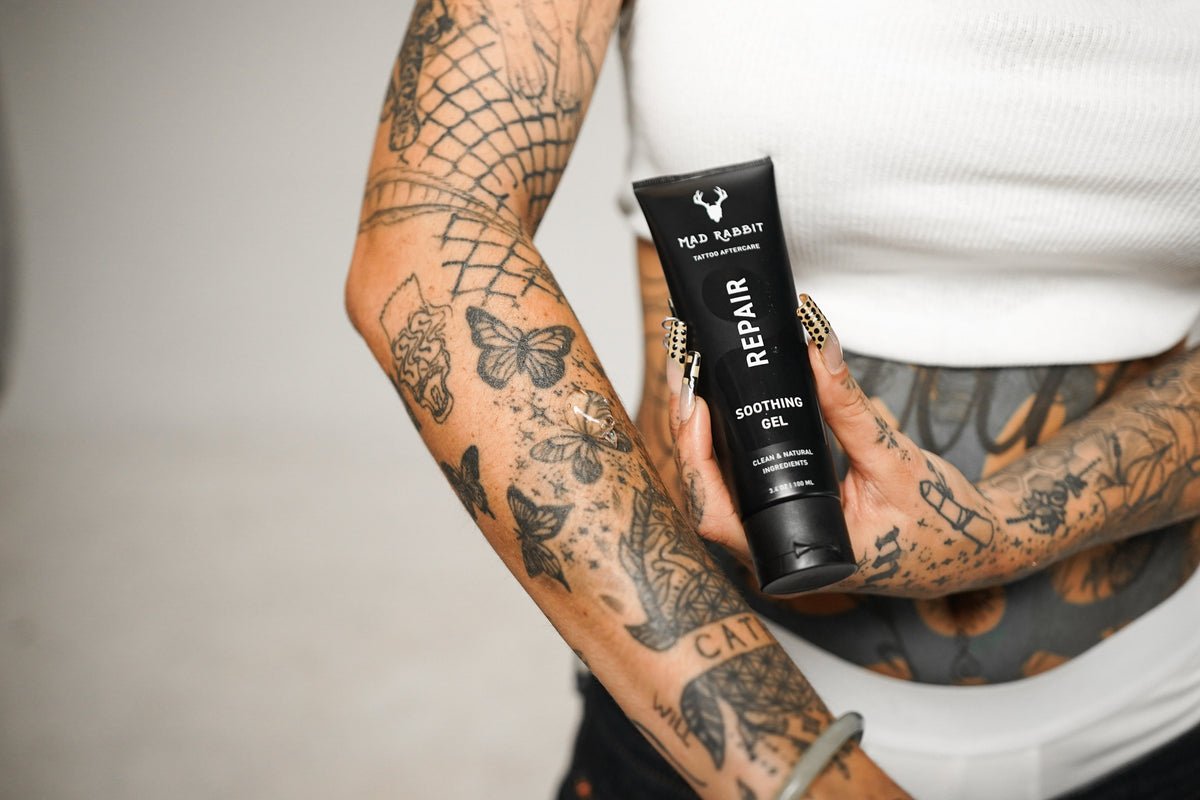
Healing period (first 2-3 weeks): Moisturize and soothe with tattoo soothing gel. This product is loaded with skin supporters like aloe and allantoin to soothe visible redness and tightness.

After scabbing (usually after 2-3 weeks): Lock in moisture with a tattoo balm stick. A clean, hands-free balm specially formulated for tattooed skin. Adds a layer of protection and enhances vibrancy.

Continued Hydration: Once fully healed, use daily tattoo lotion to keep your skin supple and the ink rich.

How do we know a medical-grade approach will work?
At Mad Rabbit, we’re always collecting direct feedback from tattoo enthusiasts and artists. The consensus that proper aftercare, backed by science, makes a visible difference is amazing. Our approach is transparency and science, and we never engage in unnecessary risks or marketing gimmicks. That means no harsh chemicals, parabens, or harsh moisturizers, only tested, gentle ingredients.
A quick note on petroleum-based ointments (Aquaphor, Vaseline, etc.)
It is acceptable for short-term use (the first 2-3 days) if nothing else is available, but switch to non-petroleum-based options as soon as possible to prevent clogged pores, stickiness, or possible allergic reactions.
FAQ
What if I have allergies or super sensitive skin? Choose fragrance-free, non-comedogenic, and hypoallergenic options. Every product in Mad Rabbit’s tattoo aftercare line is made for this purpose, giving peace of mind to even the most cautious client. If you’re on a budget, can you make do with drugstore lotion? Yes, but pay close attention to the ingredient list. If possible, avoid using fragrances, parabens, mineral oils, or heavy sealants. In such situations, always prioritize cleanliness and gentle washing. Is Second Skin available over the counter? Pharmacies may stock hospital-grade Second Skin, but always check its sterility and the manufacturer’s guidelines to ensure it is suitable for healing fresh wounds and tattoos.
Summary: Do medical-grade and purpose-formulated tattoo products make a difference?
Yes, we support faster, safer, more comfortable healing while keeping your tattoo as vibrant as day one. Clean, science-backed, skin-friendly ingredients are paramount to reducing the risk of complications and promoting beautiful results. No matter what products you use, it’s always fundamental to follow your artist’s instructions and maintain a consistent routine.
If you’re serious about taking care of your tattoos, whether you’re a first-timer or a well-established tattoo veteran, why not consider our full line of tattoo aftercare products? We put science, personal experience, and community feedback into every formula we develop. Your art is worth it.
