


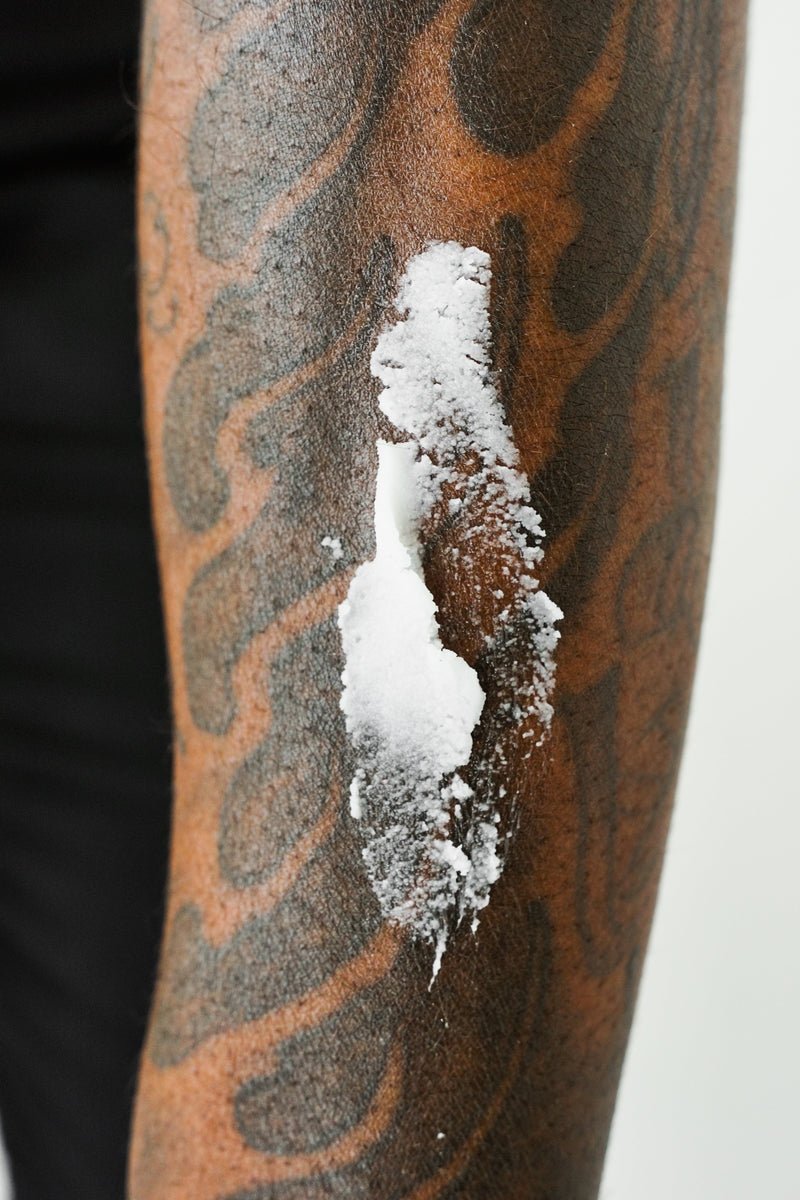
Tattoo artists spend their careers perfecting the ink of others, but what do they do when they sit in the chair after a session? Artists are some of the most deeply tattooed people in the industry, and their personal aftercare habits have been refined through years of experience, experimentation, and observing the recovery results of thousands of clients.
We spoke to artists in the community to find out what they actually use on their skin, what they recommend to their clients, and where studio care differs from home care. The answer may surprise you, or it may confirm what you suspected. The basics of good aftercare are easier than the internet makes you think.
What artists value in aftercare
The most consistent theme across all the artists we spoke to is simplicity. Despite having access to all the products on the market and decades of collective experience, the artists we spoke to are drawn to simple, no-nonsense routines.
Clean and consistent cleaning. All artists emphasized gentle cleansing during the recovery period. The reason to use a specialized unscented cleanser like Nu Tattoo Wash rather than a strong antibacterial soap or bar soap from your shower shelf is simple. This is because you need to keep the area clean without depriving it of the moisture it needs for recovery. Artists wash their clothes two to three times a day for the first two weeks, which is the same frequency they recommend for their clients.
Apply a thin layer of product consistently. None of the artists favored thick, heavy applications. The universal approach has been to apply moisturizer frequently in a thin, even layer. Artists have found that over-application causes more problems in client recovery than almost any other mistake. A thin layer of soothing gel or tattoo balm stick will absorb properly and keep your skin comfortable without choking.
Be patient during the peeling stage. Artists know better than anyone that peeling, flaking, and itching are a normal part of the recovery process. They don’t panic, they don’t choose, they don’t add extra products trying to speed things up. It keeps your skin clean and moisturized while allowing it to perform its functions. This patience comes from seeing thousands of tattoos successfully heal with minimal intervention.
Studio care vs. home care: What’s different?
At the studio, aftercare begins from the moment your tattoo is completed. The artist will clean the area, apply appropriate coverage (second skin, bandage, or wrap, depending on preference), and give the client specific instructions for the first 24 hours.
At home, the client takes over. And this is where the results diverge. Artists consistently tell us that the clients who recover most smoothly are those who improvise and follow instructions. Adding products, switching to products recommended by friends, or skipping care because the tattoo “looks good” are the most common deviations that lead to problems.
What artists want their clients to do at home:
Follow your routine unchanged for the first few days as well as during the full recovery period Resist the urge to touch, pick, or scratch your tattoo during the peeling phase Use tattoo-specific products instead of lotions you already have in your bathroom Continue to moisturize and apply SPF even after your tattoo has healed
Products for artists
Artists are inherently product agnostic. They test everything and recommend what they find to be consistently effective for a wide range of customers and skin types. Products that appear most often in personal routines reflect reliable performance.
Tattoo balm for maintenance of healed tattoos. Artists with a wide range of coverage apply it daily to keep their old works sharp. If your body is your portfolio, part of your job is to maintain the vibrancy of all your work.
New tattoo wash while recovering. A gentle, fragrance-free cleanser that works without irritation. Artists value simplicity in cleansing because they’ve seen firsthand what happens when clients use harsh or heavily scented soaps on fresh tattoos.
A gel that relieves itching. The cooling aloe-based formula is a favorite for days 2 through 14, when itching is at its worst. Artists appreciate that their clients don’t have to scratch or touch the area, which reduces frustration.
Common aftercare mistakes artists see (and should avoid)
Artists see recovery outcomes for hundreds of clients each year, so they have a unique perspective on what goes wrong and why.
Uses petroleum-derived products. Despite their continued popularity online, most artists have moved away from endorsing petroleum-based ointments. Due to excess heat and moisture being trapped, artists always find it better to use lightweight, breathable alternatives. After the first week, aftercare will be omitted. No recovery occurs after 7 days. Although the outer skin appears to be closing, deeper skin remodeling continues for many months. The artists maintain their own aftercare routines throughout, and hope to encourage more clients to do the same. SPF after recovery will be ignored. According to the American Academy of Dermatology, UV protection should be a lifelong commitment for skin health. Artists who work with their clients’ faded tattoos know exactly what years of unprotected sun exposure can do to their ink. They wear SPF every day and highly recommend it. Apply too much product. Applying too much ointment or moisturizer to your new tattoo will cause more problems than it solves. The artist applies the thinnest layer possible to cover the area, then repaints without applying too much.
An artist’s perspective on long-term care
Artists think about tattoos in terms of decades, not weeks. They know that the work they do to someone’s skin today will look different in 5, 10, 20 years, depending on how they maintain it. That long-term perspective shapes their aftercare philosophy.
Daily moisturizing is not an option. It’s maintenance like changing the oil in your car. SPF is not a summer product. It’s a daily commitment. And touch-ups are not a failure. They are part of the normal life cycle of tattoos that are loved and kept alive.
Artists who maintain their tattoos serve as a walking portfolio. Their ink is their business card. The care they put into their own skin reflects the care they put into their clients’ work.
The American Academy of Dermatology advises using water-based lotions and creams on tattooed skin, noting that petroleum-based products can cause ink to fade.
The Mayo Clinic advises washing the tattooed skin twice a day with soap and water, applying a mild moisturizer several times a day, and avoiding sun exposure until the tattoo has fully healed.
FAQ
Does the tattoo artist use the same products that they recommend to their clients?
It’s worth listening to. Artists who have personally used the products and seen the results on their own skin will give you more reliable recommendations than someone who suggests something they haven’t tried. Ask your artist what they use for their tattoos. This is one of the most reliable ways to find products that work.
How do artists care for tattoos in hard-to-reach areas?
Artists often swap sessions with colleagues, which means they get tattoos in places that aren’t easily visible or reachable. For aftercare for back, shoulder blade, and spine tattoos, ask your partner or trusted friend to help clean and moisturize. Tattoo balm sticks are especially useful for hard-to-reach areas because the stick format allows you to apply without straining your arm.
What is the most common aftercare advice given to artists?
Please follow the artist’s instructions. Every artist has a protocol that works for their particular technique and the products they rely on. Don’t substitute advice from the internet for guidance from someone who only applies art to your skin. Consistency and patience are more important than choosing a specific product.
conclusion
The artists who create the work are most focused on how the work will age. Their aftercare approach boils down to simplicity, consistency, and patience. Clean with New Tattoo Wash, soothe with Soothing Gel, maintain with Tattoo Balm, and protect with SPF. That’s the artist’s strategy, and it works because it’s based on experience, not trends.
