


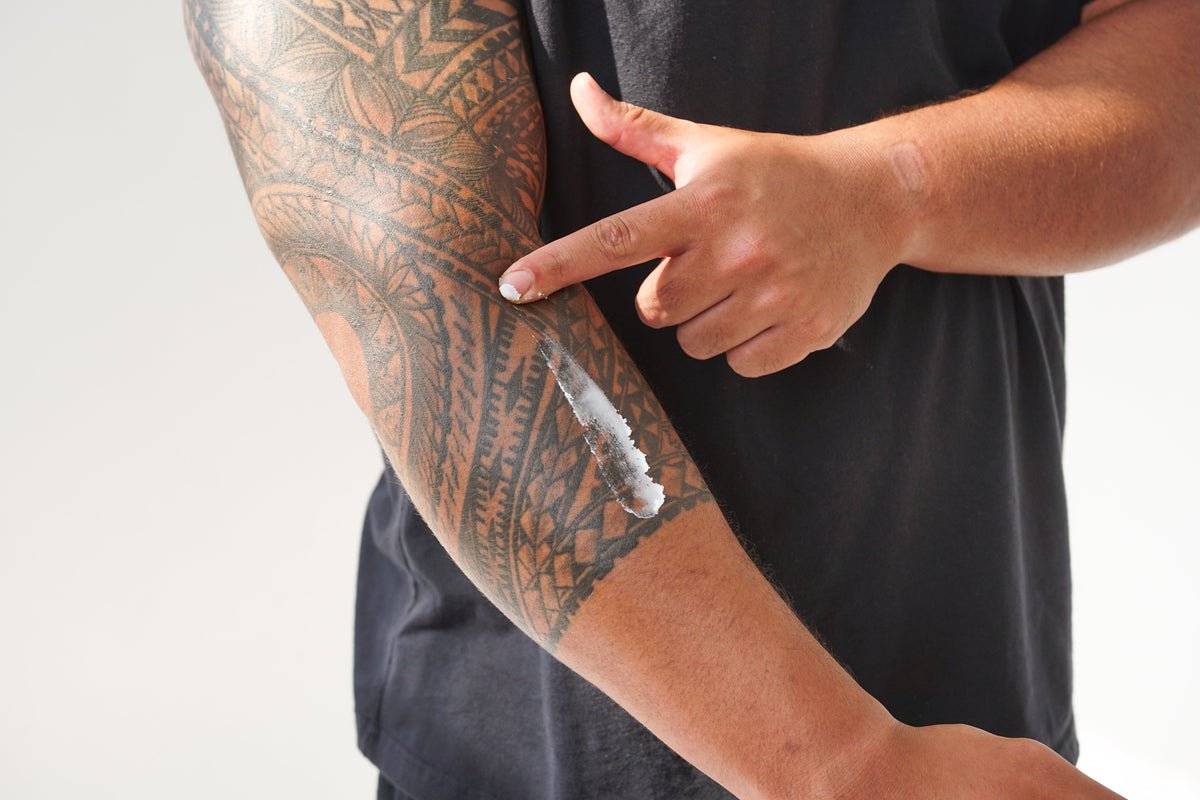
Aloe vera is ubiquitous in the world of skin care, but when it comes to tattoos, opinions are divided. Will aloe protect ink or cause new (or old) tattoos to fade? At Mad Rabbit, we care about everything that comes into contact with your skin and ink. We build tattoo aftercare based on the best available data, the expertise of professional artists, and real opinions from tattoo enthusiasts like you. So let’s be clear once and for all where the science stands on aloe vera, how aloe vera and tattoos interact, and what we (as a tattoo-centric brand) think you need to know before you get your hands on that green gel.
How aloe vera actually works
Aloe vera has long been used to soothe burns, moisturize the skin, and soothe inflammation. Rich in amino acids and antioxidants, it supports the skin’s natural healing process. For common skin problems, aloe provides mild hydration and immediate relief, especially for mildly irritated or sun-exposed skin.
Tattoos are not ordinary skin: why the difference matters
Healing tattooed skin is completely different from regular skin care. New ink is an open wound. Colored and black pigments are intentionally deposited in the dermis (rather than just on the surface). The aftercare you choose will not only directly affect your comfort during healing, but also how your tattoo will look months and even years later. That’s why your choice isn’t just about calming your mind. It is important to maintain the vibrancy of the ink and the integrity of the skin without causing further damage.
Science-backed insights: Aloe vera and tattoo healing
Aloe vera may provide soothing hydration during the first few days after getting a tattoo, especially when blended with other gentle moisturizers. This is not a panacea. Aloe itself does not contain the optimal fatty acids and protective ingredients needed for true tattoo repair. Risks of overuse: For some people, using too much straight aloe vera (especially drugstore gels with added alcohol or fragrances) can dry out new tattoos and inhibit your body’s natural healing mechanisms, causing fading, irritation, and even scabbing. Stain and Film: Cheap aloe gels can leave a residue or sticky layer on the new ink, which is not ideal for wound healing.
Will aloe vera erase tattoos?
Let’s be frank: pure aloe vera (from a fresh plant or a clean, unscented bottle) is unlikely to actively remove ink. However, aloe alone does not provide all the skin repair benefits needed for tattoo healing. On the other hand, certain ready-made aloe gels (especially those containing dyes, alcohol, or questionable additives) can cause dryness, itching, and even scabbing. These problems can easily cause patchy healing and ink loss. Therefore, using the wrong aloe product can lead to dull, faded results. This may not be due to the aloe itself, but to what is mixed with it.
What do tattoo artists and dermatologists recommend?
Qualified tattoo artists and board-certified dermatologists usually advise against relying solely on aloe for tattoo healing. Instead, we recommend aftercare blends that incorporate aloe’s soothing properties with hydration, barrier protection, and anti-inflammatory support. This way, you get the calming benefits of aloe while supporting your skin’s barrier (and ink) through each stage of healing.
How to use aloe vera in mud rabbit tattoo aftercare
At Mad Rabbit, we strongly believe in the synergistic effects of clean, gentle ingredients, including aloe vera, but we never rely on aloe alone for tattoo healing. Our new Tattoo Aftercare Intro Kit is a perfect example.
New tattoo aftercare introductory kit
Repair Tattoo Wash uses a gentle foaming base to remove impurities without stripping the skin. Soothing Gel combines aloe vera with other soothing and moisturizing ingredients to soothe the irritation of fresh ink. Tattoo balm sticks utilize antioxidant-rich butters and light oils (similar to aloe) to support your skin’s moisture barrier and lock in vitality during healing.
All formulas are dermatologist-tested, vegan, and free of harsh chemicals like parabens, phthalates, petroleum, artificial dyes, and fragrances that are often found in obscure aloe gels.
How to safely use aloe vera on a new tattoo
If you want to use aloe vera, look for one that is pure and has no additives. Avoid foods that are colored or scented, or contain a lot of alcohol. Use aloe as a secondary soothing agent, not as your sole moisturizer. Pair it with products specially formulated for tattoo aftercare. Be sure to perform a patch test, especially if you are prone to sensitivities. Do not apply the aloe too thickly. The thin, light layer is effective at hydrating and won’t suffocate healing skin. Monitor for signs of excessive dryness, peeling, or irritation and discontinue use if you notice any problems.
Common Mistakes: Aloe Vera and Tattoo Healing
I see many well-meaning people unintentionally delay tattoo healing. Things to avoid are:
Use “green” aloe gel with dye on the open skin. These can irritate or stain your tattoo. Apply aloe mixed with lidocaine or benzocaine (a pain-relieving gel) to the new ink, which can be harsh. Applying too much aloe to the point of skin maceration can actually slow healing and prevent scab formation. Skip the complete aftercare routine. Healing and tattoo maintenance is about the entire regimen, not a single hero element.
Best Practices: A Complete Tattoo Aftercare Routine
The real secret to bold, long-lasting ink is a comprehensive approach, both in the healing phase and in lifelong care. The key to ideal tattoo healing is proper daily aftercare. Aloe is known for its soothing properties, but best results are achieved when blended with a targeted cleanser, daily light hydration, a balm for barrier protection, and (long-term) SPF to prevent fading from UV rays.
Can aloe help keep old tattoos vibrant?
For healed tattoos, aloe is not harmful, but you should look for products that not only moisturize, but also fix color, support the skin barrier, and deliver antioxidants. Our Tattoo Aftercare Intro Kit works not only for newly inked tattoos, but also serves as a go-to for older tattoos that need a boost of vibrancy, as it contains balms designed to enhance and stimulate all types of ink.
FAQ: Aloe Vera Tattoo Questions and Answers
Is aloe vera good for tattoo exfoliation? It has a mild soothing effect, but use it in moderation and supplement with a richer moisturizer as recommended by your tattoo artist or dermatologist. Does aloe cause tattoo fading or discoloration? Not inherently, but be aware of ingredients added to aloe that can inhibit healing or dry out the skin. Can I use aloe vera as my only aftercare product? Not recommended. Science and experience show that gentle, targeted aftercare can result in stronger, more vibrant tattoos. Can aloe vera help with the “healing” phase of itching? Yes, it can be used as part of a particularly clean, non-comedogenic balm or gel.
Summary: The real role of aloe vera in tattoo care
Aloe alone is not enough for complete tattoo aftercare. Best blended with other vegan ingredients that focus on recovery and are less harsh. Aloe gel that contains chemicals, dyes, and alcohol can be bad news for your healing ink. Proper tattoo aftercare is about supporting the skin and the ink together, and it’s never about pursuing a single magic ingredient.
Are you ready to upgrade your tattoo aftercare?
If your goal is long-lasting color, minimal irritation, and a feeling that’s as good on your skin as your art looks, consider tattoo-specific aftercare options. The new Tattoo Aftercare Intro Kit is made with science-backed ingredients (like aloe vera, argan oil, and glycerin) to protect both your skin and your statement for years to come.
New tattoo aftercare introductory kit
Interested in a complete step-by-step process? Knowing what to do within the first 48 hours of getting your tattoo will make a big difference in your long-term results.
We are committed to providing transparent and informed care at every step of your ink journey. For more science-backed tips, trend updates, and product news, keep exploring at Mad Rabbit. Your next vibrant tattoo starts with knowledge and proper aftercare.
